

In our Adaptive Leadership Development courses, I commonly refer to the Ego, as things and concepts we attach to our identity, and become things that we protect, at all costs without even thinking about it.
For example, we commonly confuse providing advice (The Advice Monster 👹) with coaching. Our ego encourages us to provide advice because it reinforces our identity that we protect people from harm and “I’m a good person”.
Your Organization’s Culture Impacts Leader’s Ego Development
Ego development is essential to becoming an “Adaptive Leader”. As we discuss in Module I, becoming an Adaptive leader requires practice as a “1st level Leader”, then “Key Leader” before becoming an “Adaptive Leader”. This growth pattern aligns with Jane Loevinger’s theory of ego development.
Organizations have influence over a leader’s ego development. Many organizations apply cultural pressure for its leaders, regardless of title, to remain at the Conformist level of development.
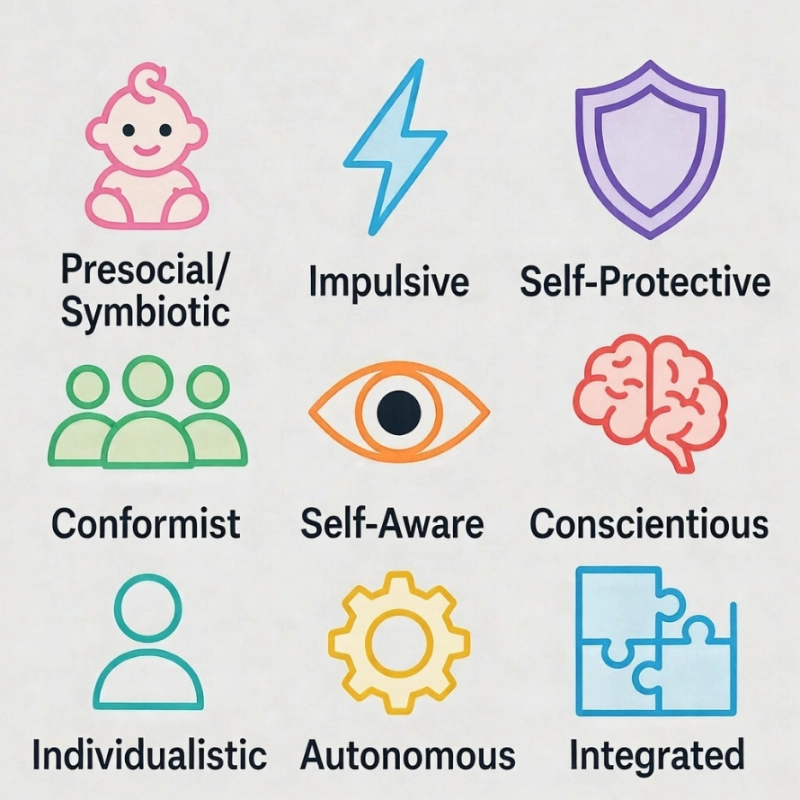
Loevinger’s theory of ego development outlines nine sequential stages that describe how individuals’ sense of self, interpersonal relations, impulse control, and conscious preoccupations evolve from infancy to advanced maturity. These stages build upon each other, reflecting increasing complexity in meaning-making and self-awareness. Below is a summary of each stage, including key characteristics:
Presocial/Symbiotic
Occurs in infancy; the ego is undifferentiated from the environment, with a symbiotic bond to the caregiver. No distinct self-concept exists yet.
Impulsive
Early childhood; driven by immediate bodily impulses and needs. Egocentric, with little impulse control; views others as sources of gratification or frustration.
Self-Protective
Opportunistic and manipulative; focuses on avoiding trouble and seeking advantage. Rules are followed to evade punishment, with a wary view of authority.
Conformist
Emphasis on belonging to the group; adheres to social norms, values, appearance, and loyalty. Interpersonal style is cooperative but superficial.
Self-Aware
Transitional stage; increased self-reflection and awareness of exceptions to rules. Begins to recognize feelings and multiple possibilities in situations.
Conscientious
Internalizes standards; focuses on achievement, responsibility, and long-term goals. Relationships are deeper, with mutuality and self-evaluated morals.
Individualistic
Transitional; greater tolerance for ambiguity and respect for individuality. Distinguishes between inner and outer life, with emphasis on autonomy in relationships.
Autonomous
Acknowledges interdependence, copes with inner conflict and role complexity. High self-fulfillment, broad empathy, and conceptual sophistication.
Integrated
Rare stage: reconciles contradictions, cherishes individuality, and achieves a sense of identity. Lives with wisdom, compassion, and a transcendent perspective.
Most adults reach stages 4-6 (Self Aware, Conscientious, Individualistic), with higher stages requiring deliberate growth.
This article was written with the assistance of Grok AI. I completed research and confirmed that the information is true and accurate.
