

To promote understanding for my readers, I share with you the key concepts of eight stimulating thinkers: Robert Kegan, Lisa Lahey, Abraham Maslow, Thomas Campbell, Epictetus, Mihaly Csikszentmihalyi, C. Otto Scharmer and Phil Stutz. The blog article begins after these summaries.
Kegan and Lahey – Adult Mental Complexity
Kegan and Lahey, in their work on developmental psychology, outline three plateaus of adult mental complexity, each representing a more advanced stage of how adults understand and engage with the world.

These stages are:
- The Socialized Mind
At this initial plateau, individuals are shaped by the norms, expectations, and values of their social environment. They define themselves through their relationships and roles, excelling at fitting in and following established rules. However, they may find it challenging to think independently or question the status quo.
Picture yourself Riding in a car.
- The Self-Authoring Mind
The second plateau marks a shift toward greater independence. Individuals develop their own internal values, beliefs, and goals, allowing them to make decisions based on personal judgment rather than external pressures. This stage reflects a strong sense of identity and the ability to critically evaluate and pursue what matters to them.
Picture yourself Driving a Car.
- The Self-Transforming Mind
The third and most advanced plateau involves a capacity to embrace complexity and ambiguity. Individuals can hold multiple perspectives at once, question their own assumptions, and adapt their beliefs over time. This stage enables a flexible, integrative approach to life, where learning from diverse experiences shapes an evolving worldview.
Picture yourself Remaking the Design of the Car, and the Roadmap.
Kegan and Lahey emphasize that moving through these plateaus is not a given it requires intentional effort and support. They also point out that many adults remain at the earlier stages, which can limit their ability to handle intricate personal or professional challenges. Together, these plateaus illustrate a framework for how mental complexity develops and deepens over the course of adulthood.
Maslow’s Hierarchy of Needs
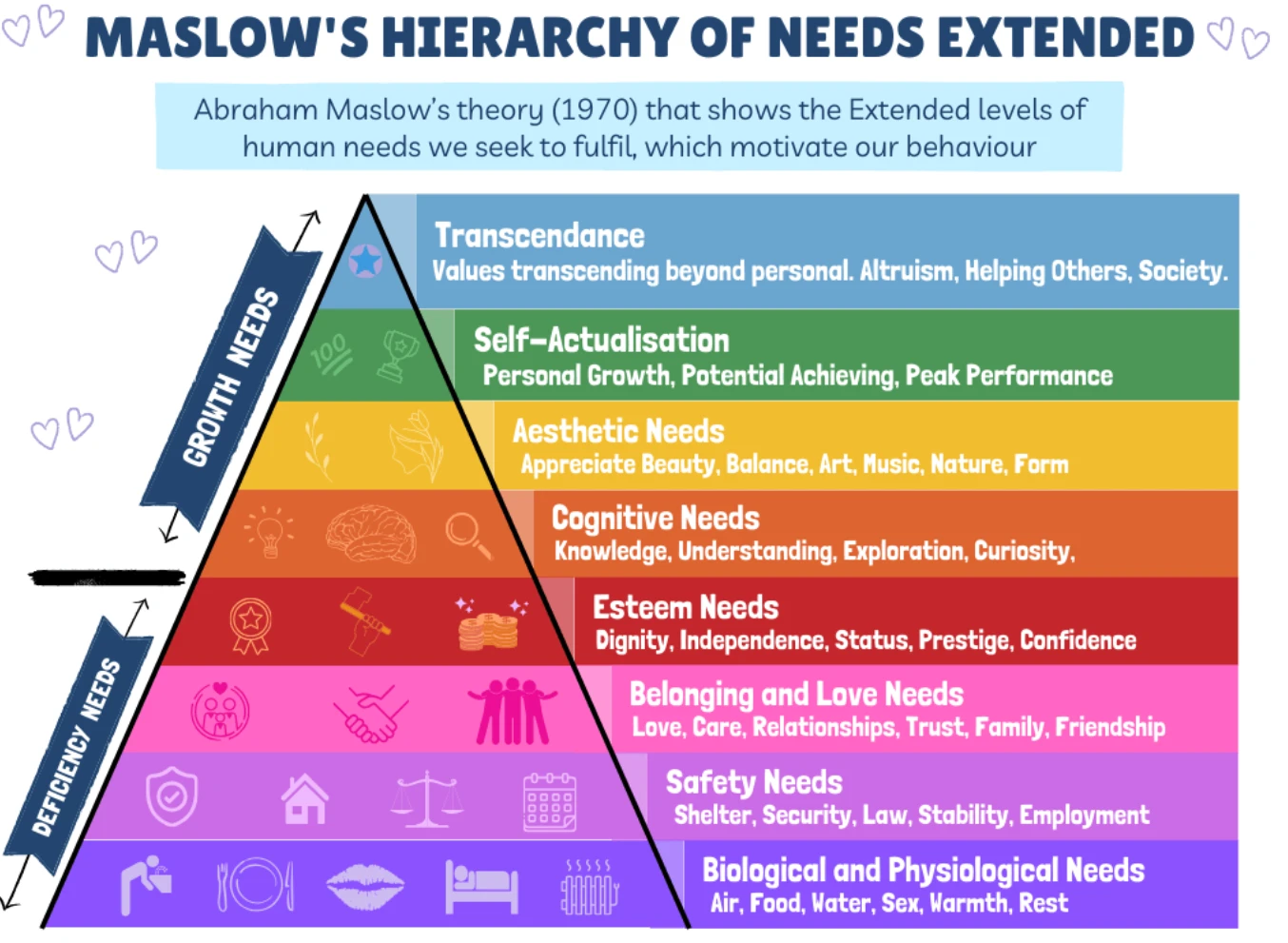
Abraham Maslow’s Hierarchy of Needs is a motivational theory depicted as a pyramid of human requirements, progressing from basic to advanced levels. At the base are physiological needs (food, water, shelter, sleep). Next is safety (security, stability). Then comes love and belonging (relationships, intimacy). Followed by esteem (respect, achievement). At the apex is self-actualization, where individuals realize their full potential, pursue personal growth and achieve peak experiences. Later in his work, Maslow expanded the hierarchy to include self-transcendence as the highest level, involving going beyond the self through altruism, spirituality, peak experiences that connect to a greater whole, and contributing to causes larger than oneself. Maslow posited that lower needs must generally be satisfied before higher ones motivate behavior, though the hierarchy is flexible and influenced by cultural and individual factors.
Otto Scharmer’s Emerging Future Concept
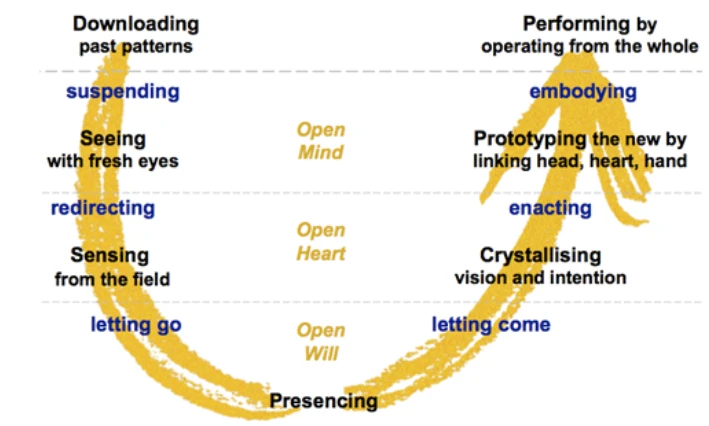
Otto Scharmer’s concept of the emerging future is a core element of his Theory U framework, which focuses on transformative leadership and innovation. It shifts the paradigm from reacting to past patterns or problems to “presencing” a state of deep presence combined with sensing emerging possibilities. This involves letting go of old assumptions, connecting to one’s highest potential through open mind, heart, and will, and co-creating future outcomes. By accessing collective intelligence and leaning into what wants to emerge, individuals and systems can address complex challenges like ecological and social divides, fostering breakthroughs that align with a more sustainable and equitable world.
Phil Stutz’s Concepts on the Living Force
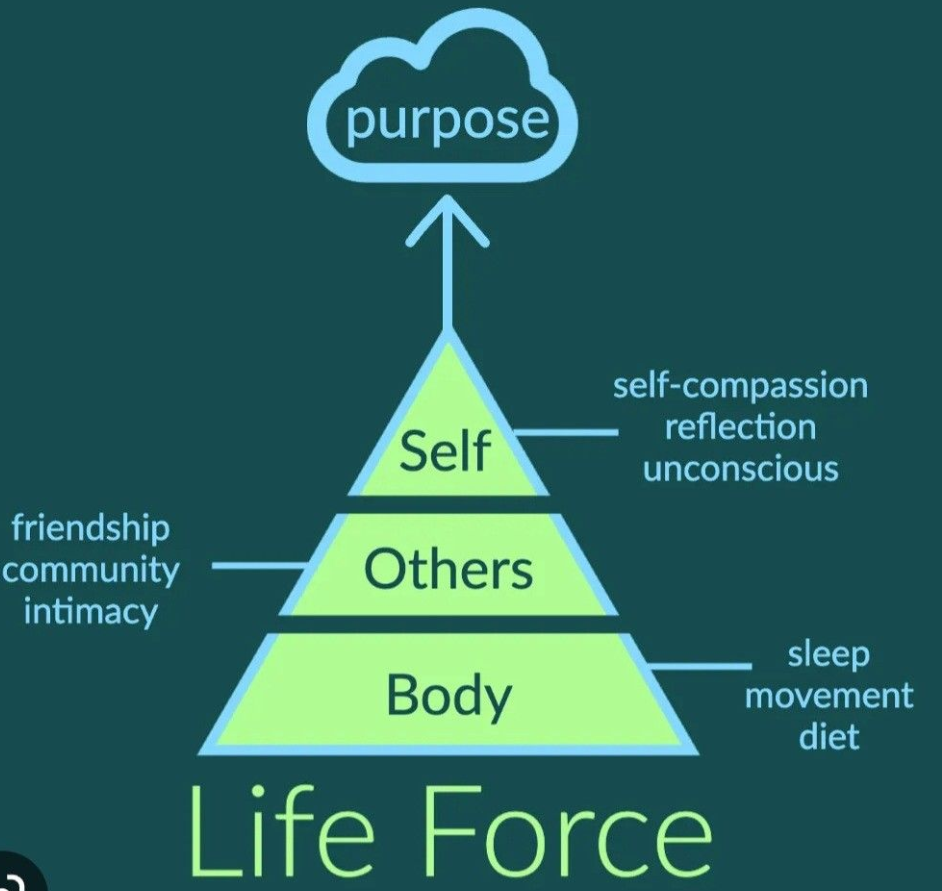
Psychiatrist Phil Stutz describes a “Life Force” as an innate, animating energy within every human, connected to higher, invisible forces that provide support and vitality. This force operates on three levels: the body (physical health and energy), relationships (connections with others), and the self (inner dialogue and purpose). Born with this vibrant force, individuals often deny or suppress it as they age due to societal pressures, fear, or inertia, leading to stagnation, depression, and a sense of disconnection. By actively working on the Life Force through tools like visualization, action-oriented exercises, and faith in higher forces, people can reverse inertia, reclaim vitality, and navigate life’s adversities with resilience and purpose.
Entropy Concepts from My Big TOE
In Tom Campbell’s “My Big Theory of Everything” (My Big TOE), entropy is borrowed from physics but applied to consciousness as a measure of disorder, randomness, or inefficiency within information systems (including individual minds and larger realities). High entropy equates to chaos, fear, ego-driven behavior, and stagnation, while low entropy represents organization, cooperation, love, and evolution. The universe, as a virtual reality simulated by consciousness, it evolves by reducing entropy: individuals grow by making choices that lower their personal entropy, such as shifting from self-centeredness to empathy and awareness. This process is the core purpose of existence, driving personal development, reducing systemic disorder, and enhancing the overall quality of consciousness across realities. These ideas culminate in a Big Theory of Everything, providing a practical framework for understanding and navigating life’s complexities through entropy management and conscious evolution.
Stoic Concept of Observing Situations Before Acting
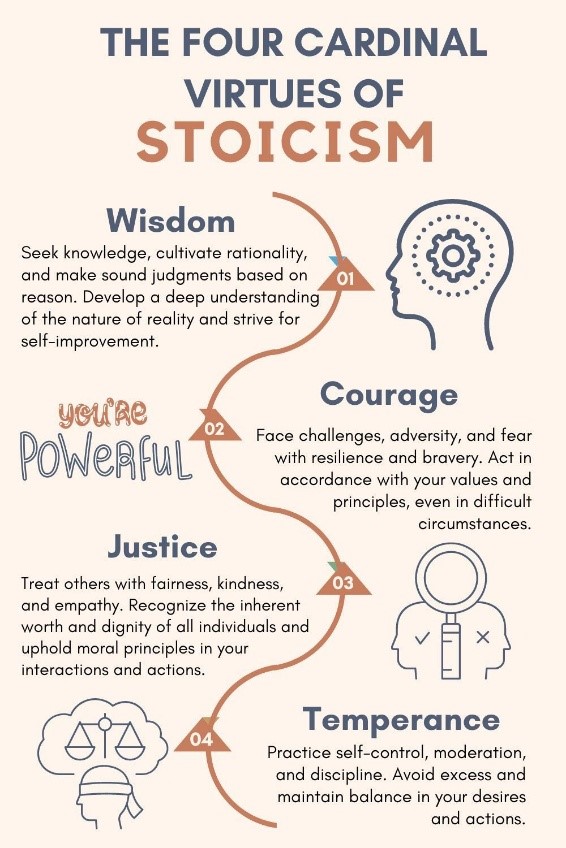
Stoicism, as taught by philosophers like Epictetus, Marcus Aurelius, and Seneca, advocates for a disciplined approach to life’s events: rather than reacting impulsively with emotion (e.g., anger or fear), one should first observe the situation objectively, recognizing the dichotomy of control what is within one’s power (judgments, actions) versus what isn’t (external events). This pause allows for rational reflection, aligning responses with virtue (wisdom, justice, courage, temperance). The goal is to act intentionally for the greater good, transforming potential negatives into opportunities for growth and moral excellence, fostering inner tranquility amid chaos.
Mihaly Csikszentmihalyi’s Flow Psychology
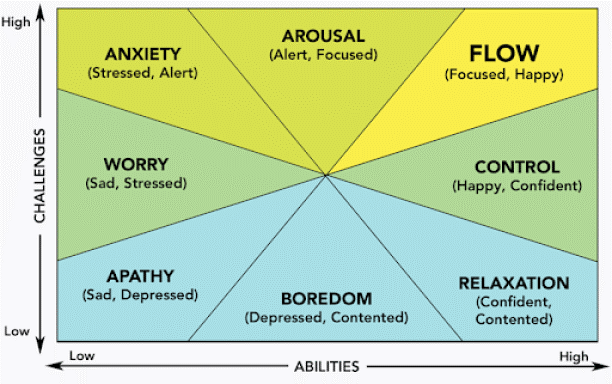
Mihaly Csikszentmihalyi’s Flow theory describes a psychological state of optimal experience where individuals become fully immersed and absorbed in an activity, leading to deep engagement, enjoyment, and a sense of effortless control. Key characteristics include intense concentration, merging of action and awareness, loss of self consciousness, distorted sense of time, intrinsic motivation, and a balance between perceived challenges and personal skills too little challenge leads to boredom, too much to anxiety. Flow reduces “psychic entropy,” or mental disorder, by creating order in consciousness through focused psychic energy. Autotelic activities, those done for there own sake foster this state, promoting personal growth, creativity, and happiness, often in pursuits like art, sports, or work that align with one’s abilities and goals.
Interrelating Concepts: Defeating Entropy Through Self-Development
The Human Quest for Order Amid Chaos
In an era of accelerating change marked by environmental crises, social fragmentation, and technological disruption, humanity faces a profound challenge: how to evolve beyond mere survival into a state of thriving purpose. At the heart of this lies the concept of entropy, not just as a physical law of disorder but as a metaphor for the inner and collective chaos that erodes our potential. Drawing from diverse thinkers Otto Scharmer’s emerging future, Abraham Maslow’s hierarchy of needs, Phil Stutz’s life force, Tom Campbell’s My Big TOE, Stoic philosophy, and Mihaly Csikszentmihalyi’s flow psychology we uncover a unified narrative. These frameworks interweave to argue that self-development is humanity’s primary tool for defeating entropy. By nurturing awareness, vitality, intentional action, and immersive engagement, individuals can reduce personal and systemic disorder, fostering evolution toward love, innovation, and harmony. This article explores their interconnections, revealing a blueprint for personal transformation that counters inertia and propels us toward a higher existence.
The Foundations: Needs, Forces, and the Pull of Potential
At the base of human motivation lies Maslow’s Hierarchy of Needs, a structured ascent from primal survival to transcendent growth. Physiological and safety needs form the foundation, ensuring stability against entropy’s chaotic pull hunger, insecurity, or isolation breed disorder in the mind and body. As one climbs to love, esteem, and self-actualization, the focus shifts to inner fulfillment, where creativity and purpose emerge, culminating in self-transcendence, where personal boundaries dissolve in service to others and higher ideals. This hierarchy mirrors Phil Stutz’s Life Force pyramid: the body (aligning with physiological needs), relationships (love and belonging), and self (esteem and actualization). Stutz warns that denying this innate force connected to higher energies leads to inertia, a state of high entropy where vitality stagnates, echoing Campbell’s view in My Big TOE that unchecked ego and fear increase disorder.
Csikszentmihalyi’s flow psychology complements this foundation by providing a mechanism for channeling the Life Force into ordered experiences. Flow occurs when challenges match skills, creating a state of focused immersion that minimizes psychic entropy the mental chaos of distractions and self-doubt. This aligns with Maslow’s higher levels, as flow often emerges during self-actualizing activities, enhancing transcendence through peak experiences of unity and joy.
These concepts interrelate through a shared emphasis on progression. Maslow’s self-actualization and transcendence require acknowledging and nurturing Stutz’s Life Force, preventing the denial that turns dynamic humans into inert beings, while flow states amplify this by directing energy toward autotelic growth. In My Big TOE, this denial manifests as high-entropy consciousness, where individuals fail to evolve, perpetuating cycles of suffering ideas that form a little theory of everything for practical application. Self-development here becomes an entropy-reduction strategy: by satisfying lower needs (Maslow), one frees energy to cultivate the Life Force (Stutz) and enter flow (Csikszentmihalyi), lowering personal disorder and aligning with Campbell’s evolutionary imperative. For instance, someone mired in safety concerns cannot access higher forces or flow; only through deliberate growth exercise for the body, vulnerability in relationships, introspection for the self does entropy decrease, paving the way for transcendent contributions that benefit the collective.
Observing and Responding: The Stoic Bridge to Action
Stoicism serves as the practical mechanism linking these inner foundations to outward transformation. The Stoic injunction to observe rather than react pausing to assess situations through reason prevents impulsive entropy amplification. Emotional reactions, like anger or despair, increasing disorder by clouding judgment and perpetuating negative cycles. Instead, Stoics advocate for virtuous action: observe the event, discern what’s controllable, and respond for the good. This resonates deeply with Stutz’s tools, which often involve visualizing higher forces to override inertia, much like a Stoic’s mental rehearsal of adversities (premeditatio malorum) to build resilience, and with Csikszentmihalyi’s flow, where focused attention merges action and awareness, shutting out distractions for effortless control.
Interwoven with Maslow, Stoicism ensures that need fulfillment isn’t passive but intentional. For example, pursuing esteem without Stoic reflection might lead to ego-driven achievements, raising entropy through competition rather than cooperation (per My Big TOE). Stoics like Marcus Aurelius emphasized acting for the common good, aligning with Campbell’s low-entropy states of love and interconnectedness, Maslow’s self-transcendence, and the intrinsic motivation of flow states. By observing life’s “virtual reality” (Campbell’s term), one avoids reactive denial of the Life Force (Stutz), instead channeling it toward self-actualization, transcendence, and flow. This disciplined pause creates space for growth, transforming potential chaos into ordered progress.
Presencing the Future: Scharmer’s Vision as the Capstone
Otto Scharmer’s emerging future concept elevates these ideas into a collective dimension, urging us to “lead from the future” rather than the past. Theory U’s U-shaped process downloading old patterns, suspending judgment, presencing at the bottom, and crystallizing new prototypes mirrors the entropy-reduction journey. The descent involves confronting entropy: letting go of high-disorder habits (Stoic non-reaction), addressing unmet needs (Maslow), and reconnecting with suppressed forces (Stutz). At the “U’s” nadir, presencing connects to emerging potentials, akin to accessing Campbell’s higher consciousness or Stutz’s higher forces, where low-entropy insights arise that foster transcendence and often, this deep presence evokes flow, with its immersion and timelessness enables creative breakthroughs.
This interrelation is profound: Scharmer’s presencing requires self-development. Without satisfying Maslow’s hierarchy up to transcendence, one lacks stability and altruism to sense futures; without Stoic observation, reactions block openness; without nurturing Stutz’s Life Force, inertia prevents leaning in; without flow’s focused engagement, the process remains superficial. In My Big TOE, presencing is entropy-lowering evolution in action consciousness organizing itself toward better futures, encapsulating a Big Theory of Everything. Scharmer’s eco-system awareness (vs. ego-system) echoes Campbell’s cooperative low-entropy states, where self-development extends beyond the individual to societal transformation. For instance, a leader using Theory U to address climate change defeats entropy by fostering collaborative innovation, drawing on personal vitality (Stutz), rational action (Stoics), transcendent purpose (Maslow), and flow-driven creativity (Csikszentmihalyi).
Synergies in Practice: A Pathway to Defeating Entropy
These concepts converge on self-development as entropy’s antidote. Consider a lifecycle view: Born with Stutz’s vibrant Life Force, humans start low entropy, connected to higher potentials. Aging introduces disorder unmet needs (Maslow) lead to denial, reactions (contra Stoics) amplify chaos, and disconnection from emerging futures (Scharmer) perpetuates stagnation, while avoiding flow states keeps psychic energy scattered. My Big TOE frames this as an evolutionary test: reduce entropy or devolve, with its principles offering a Big Theory of Everything for guidance.
Self-development interrupts entropy. Begin with basics: Meet physiological/safety needs while Stoically observing habits. Build relationships to energize the Life Force, ascending Maslow’s pyramid through actualization to transcendence. Use Stutz’s tools grateful flow or reversal of desire to combat inertia, aligning with Stoic virtue. Engage in flow-inducing activities, like skill-challenging hobbies, to order consciousness. Then, presence emerging futures (Scharmer), making low-entropy choices (Campbell) like empathy over fear. Real-world examples abound. Entrepreneurs like Elon Musk embody this: fulfilling needs, observing market chaos without panic, nurturing inner force for innovation, entering flow during problem-solving, and leading toward sustainable futures all reducing systemic entropy with a transcendent vision. Therapeutically, Stutz’s patients reclaim vitality, Stoics find peace in adversity, Maslow-inspired coaches guide actualization and transcendence, Scharmer’s U. Lab participants co-create solutions, Csikszentmihalyi’s flow practitioners achieve optimal experiences, and Campbell’s explorers meditate to lower consciousness entropy.
Challenges persist: Modern distractions (social media, consumerism) heighten entropy by fostering reaction over response, denial over force, and boredom overflow. Yet, integration offers hope apps blending Stoic journaling with Life Force exercises and flow trackers, or workshops merging Theory U, My Big TOE, and flow psychology principles.
The Imperative of Self-Development in an Entropic World
Ultimately, these thinkers paint a cohesive picture: Entropy is not inevitable defeat but a call to action. By interrelating Scharmer’s future-sensing, Maslow’s need-fulfillment up to transcendence, Stutz’s force-nurturing, Campbell’s entropy-reduction, Stoic observation, and Csikszentmihalyi’s flow immersion, we see self-development as humanity’s evolutionary engine. It demands disciplined daily practices like meditation (to presence), reflection (to respond), connection (to forces), and engagement (for flow) but yields profound rewards: personal vitality, societal harmony, and cosmic evolution. In defeating entropy, we don’t just survive; we thrive, transcending our highest selves in states of optimal experience. As Campbell might say, this is the purpose of our “virtual reality.” As Stutz urges, trust higher forces. As Stoics advise, act wisely. As Maslow encourages us to – reach beyond the peak. As Scharmer invites, lean into what’s emerging.
As Csikszentmihalyi reveals, find flow in the journey. Together, they compel us:
Develop thyself, for in order lies our future.
